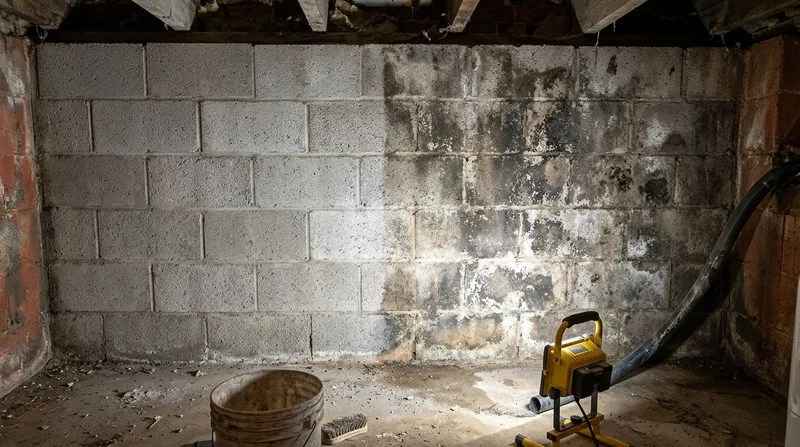




Basement Mold Remediation in Lawton
When Basement Mold Remediation in Lawton becomes necessary, it is almost always because water found a way into a lower level and stayed there. Lawton sits on Permian red clay and shale that swells with every spring rain and shrinks hard in July, and that movement cracks block walls and slab edges across the older core near Fort Sill and along Cache Road. The few homes here with full or partial basements, mostly 1940s brick ranches and 1970s to 1990s split-levels, take on water through footing joints and porous block long before a homeowner sees a puddle. We treat the mold and we fix the moisture source, because remediation without drainage is a repeat job waiting to happen. Start with a free basement inspection and we will tell you plainly what is wet and why.
Why Basement Mold Keeps Coming Back in Lawton's Red Clay
Most Lawton subdivisions built after 1990 are slab-on-grade, so the below-grade work concentrates in the older homes and split-levels that actually have a lower level. Those foundations sit in clay that holds water against the wall for days after a storm. Heavy spring rains and summer downpours send fast runoff across flat lots and into low corners, and the creek draws running out toward the Wichita Mountains push the water table up fast. Mold needs sustained damp, not a one-time splash, and that is exactly what a leaking footing drain delivers.
- Block walls wick groundwater and stay damp long after the rain stops.
- Efflorescence (the white salt bloom) signals moisture moving through the masonry.
- A musty smell that returns every humid week usually means damp drywall or carpet, not a dead animal.
- Failed sump pumps and short discharge lines dump water right back against the foundation.
If you see any of these, the mold is a symptom and the water is the problem.
Key info: A split-level off Cache Road near Fort Sill had mold climbing the lower block wall every June. The cause was a cracked footing joint and a discharge line that ended two feet from the wall. Sealing the joint and extending the discharge fixed the source, and the wall stayed dry through the next spring.
For official guidance on moisture and mold in buildings, the EPA mold resource page is a solid reference. Local permit questions go to the City of Lawton building department, and rules vary, so verify before any structural or drainage work.
How We Run Basement Mold Remediation in Lawton
We do not fog a basement and call it done. The first hour is diagnostics: moisture meter readings on every wall, a musty smell trace to find the dampest corner, and a look at the grading and downspouts outside. Then we contain the work area with plastic and negative air so spores do not travel through the house. Only after the moisture source is identified do we treat surfaces, and the drainage fix goes in before the remediation is signed off.
- We map moisture with a pin meter and infrared camera to find the wet zone.
- We set containment and HEPA filtration before any disturbed material is bagged.
- We remove and bag porous materials (drywall, insulation, carpet) that cannot be dried.
- We treat framing and masonry with an antimicrobial and dry the assembly to a verified reading.
- We correct the water path with crack injection, interior drain tile, or grading as the inspection dictates.
- We re-check moisture before closing the job, because a dry wall is the only proof.
The last step is the one that matters. A treated wall with a wet footing behind it grows mold again by the next humid spell.
Key info: In a 1950s brick ranch near Geronimo, the mold was only on the bottom two feet of a block wall. The footing drain was silted shut. We cleared and repaired the drain tile, treated the wall, and the musty smell did not return the following spring.
Remediation Approaches We Use in Lawton Basements
Not every damp basement needs the same scope. A single hairline crack with surface mold is a small job. A block wall with hydrostatic pressure behind it and mold across the lower courses is a drainage job first. The table below shows how we match the approach to what the inspection finds.
| Approach | Description | Best for |
|---|---|---|
| Surface treatment plus moisture control | Containment, antimicrobial treatment, and drying of affected masonry and framing | Light surface mold with a single identified leak |
| Removal and reconstruction | Bagging and removing porous materials, then rebuilding the finished wall | Mold into drywall, insulation, or carpet |
| Crack injection plus treatment | Epoxy or polyurethane injection into the crack, then surface remediation | Poured concrete wall with a wet vertical crack |
| Interior drain tile plus sump | Perimeter drain and sump basin to relieve hydrostatic pressure, then remediation | Block wall wet across the whole lower course |
| Dehumidification and vapor control | Sealed vapor barrier and controlled dehumidification for damp lower levels | Humid basement with no single active leak |
We tell you which row your basement falls into before any work starts, and we say so when simple sealing is enough.
Basement Mold Remediation Cost in Lawton: What to Expect
Most residential remediation jobs here start around $1,500 and climb from there based on square footage affected, how much porous material has to come out, and whether drainage work is needed to stop the water. A small treated area on a block wall with a repaired crack sits near the low end. A finished basement with mold behind drywall and a failed footing drain pushes well past that, because removal, drying, and drainage all land in the same job. We price the moisture fix separately so you can see what stops the water and what cleans up after it.
Two or three estimates is the right way to shop this work. Ask each contractor what they found as the moisture source and how they plan to correct it, because a quote that only treats surfaces will not hold. Our full breakdown of rates and scope is on the pricing page.
Hiring a Basement Mold Remediation Contractor Near Me in Lawton
Ask three things before you sign: are you licensed and insured, what is the moisture source, and will you show me the readings before and after. A contractor who cannot name the water path is guessing. Get references from jobs in Lawton or the surrounding towns, and call them. If the work touches structural repair, egress window cutting, or the drainage connection, permits are commonly required and the local building department sets the threshold, so verify with them directly.
Reach out through our contact page to schedule, and we will walk the basement with you and explain what we find.
Basement Mold Remediation Near Me: What Lawton Homeowners Should Know
The musty smell that shows up every humid week in a Lawton basement is the most common call we get, and it almost always traces to a moisture source that was never corrected. We diagnose the smell, find the damp wall, and fix the water before we treat the mold. If your lower level stays damp after storms, the answer is drainage and dehumidification, not another coat of paint. Call (580) 215-5514 and we will tell you what we see.
Basement Mold Remediation in Lawton: Pricing Guide
| Service | Price | Details |
|---|---|---|
| Surface treatment and moisture control | Starting at $1,500 | Includes containment, antimicrobial treatment, and drying of affected masonry and framing |
| Removal and reconstruction | Starting at $2,800 | Bagging and removing porous materials, then rebuilding the finished wall section |
| Crack injection plus treatment | Starting at $2,200 | Epoxy or polyurethane injection into the crack, then surface remediation of the wall |
| Interior drain tile plus sump | On estimate | Perimeter drain and sump basin to relieve hydrostatic pressure, priced after an on-site look |
| Travel | Included | In Lawton and surrounding areas, no separate call-out or mileage fee |
| Estimate | Free | Response within 24h at (580) 215-5514, no obligation to book |
Indicative pricing, the exact cost depends on square footage, finish, and site access. Free personalized estimate within 24h at (580) 215-5514.


